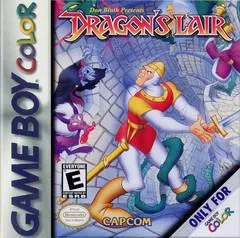
Dragon's Lair GameBoy Color - Prix, Cote & Argus
Fiche Technique
- Console
- GameBoy Color
- Genre
- Action & Adventure
- Éditeur
- CSG Imagesoft
- Sortie
- 2001
🌍 Cote Argus
Historique des prix
Échelle de prix et état du marché : Dragon's Lair
Guide d'achat et authenticité
Dragon's Lair est-il rare ?
Sorti en 2001 sur GameBoy Color, Dragon's Lair est un jeu d'action & adventure de CSG Imagesoft représente une pièce intéressante pour tout collectionneur.
La stabilité des prix en fait une valeur sûre pour les collectionneurs. La demande constante pour les titres classiques de CSG Imagesoft, combinée à l'attrait du genre action & adventure, en fait un ajout solide à toute collection GameBoy Color.
Description
Dragon's Lair is a side-scrolling platform game based on the laserdisc game of the same name released for the Nintendo Entertainment System and developed by the MotiveTime group. Plotwise, the game is identical to the original. The game is a side-scroller with the character walking slowly. Dirk can walk, crawl, or jump forward, and he has an array of weapons that he can discover and use to dispose of enemies. The controller layout is reversed from other mainstream NES titles, with Select functioning as the Pause-button while Start is used for the Candle object (which helps reveal hidden weapons). Also, B is used for jumping, and A for attacking (the input of the A & B buttons is almost always the opposite in similar NES games). Two different versions were released later, first for the Famicom, with major improvements on playability and speed, and a second one for PAL regions, expanding upon the Famicom version with new enemies and cutscenes.